Can You Drink Water from a Boat's Freshwater Tank?
The Short Answer: It Depends
On most yachts, catamarans and cruising boats, freshwater tanks are the primary source of drinking water on board. The water may come from a marina supply, a watermaker or another external source before being stored in the vessel's tanks.
A question many owners and crew members ask is:
Is the water stored in a boat's freshwater tank actually safe to drink?
The answer depends on several factors, including the quality of the source water, tank maintenance, storage conditions and the presence of an effective filtration system.
Understanding these factors is essential for ensuring safe drinking water while reducing the risk of contamination on board.
How Freshwater Systems Work on a Boat
Most boats store freshwater in one or more dedicated tanks. This water is then distributed throughout the vessel to supply:
- Galley taps
- Showers
- Wash basins
- Coffee machines
- Ice makers and other onboard appliances
Because boats often travel between different marinas and countries, the quality of the source water can vary significantly from one location to another.
As a result, onboard water management relies on a combination of storage, distribution and treatment.
The Purpose of Freshwater Tanks
Freshwater tanks provide independence between refills and allow vessels to remain self-sufficient during extended cruises.
On larger yachts, tank capacities may range from several hundred to several thousand litres.
However, storing water for extended periods introduces challenges that do not exist in a residential water system.
Potable Water Doesn't Always Stay Potable
Water that is perfectly safe when loaded from a marina can change during storage.
Several factors contribute to this:
- Prolonged stagnation
- Warm temperatures
- Biofilm development
- Loss of residual disinfectants such as chlorine
Over time, these conditions can affect both water quality and safety.
Common Risks Associated with Freshwater Tanks
Stored water creates an environment where microorganisms and contaminants can develop if systems are not properly maintained.
Bacterial Growth
Even when the source water is safe, bacteria can multiply inside tanks and plumbing systems.
Potential contamination sources include:
- Tank surfaces
- Internal pipework
- Pumps and fittings
- Marina filling connections
Many of these contaminants are invisible to the naked eye.
Biofilm Formation
One of the most common challenges in marine freshwater systems is biofilm.
Biofilm is a thin biological layer that develops on the interior surfaces of tanks and pipes.
Once established, it provides protection for bacteria and can make contamination more difficult to eliminate.
This issue becomes more common when water remains stored for extended periods.
Regular tank cleaning is therefore an essential part of maintaining safe drinking water on board.
(See also: How to Prevent Contaminated Water in Boat Freshwater Tanks)
Changes in Taste and Odour
Even without significant contamination, stored water can gradually lose its original quality.
Common symptoms include:
- Metallic tastes
- Stale odours
- Unpleasant chlorine flavours
These changes often indicate that water has been sitting in the system for too long or that maintenance is required.
Why Basic Filters Are Not Always Enough
Many boats rely on simple filtration systems, typically consisting of:
- Sediment filters
- Activated carbon filters
These systems improve water quality but have limitations.
What They Do Well
Basic filters can:
- Remove visible particles
- Improve taste
- Reduce chlorine
These benefits make water more pleasant to consume.
Their Limitations
Traditional filtration may not effectively remove:
- Viruses
- Dissolved contaminants
- Heavy metals
- Pharmaceutical residues
- Microplastics
- Persistent chemical compounds
For this reason, sediment and carbon filtration are often considered the first stage of a more comprehensive water-treatment strategy.
(See also: Why Standard Boat Water Filters Aren't Enough for Safe Drinking Water)
Reverse Osmosis: A Reliable Solution for Onboard Drinking Water
Reverse osmosis has become one of the most effective methods of producing purified drinking water on boats.
Using a highly selective membrane, reverse osmosis filters water at the molecular level.
Extremely Fine Filtration
Reverse osmosis membranes typically filter down to approximately 0.0001 microns.
This allows them to significantly reduce:
- Bacteria
- Viruses
- Dissolved salts
- Heavy metals
- Microplastics
- Many chemical contaminants
The result is a highly purified water supply that is less dependent on the quality of the original source water.
(See also: Ultrafiltration vs Reverse Osmosis for Yachts: Which Water Treatment System Is Best?)
Ideal for Marine Applications
Modern reverse osmosis systems are increasingly designed for onboard installations.
Their advantages include:
- Consistent drinking-water quality
- Reduced reliance on bottled water
- Compact installation options
- Long-term protection against changing marina water quality
For yachts and catamarans, this provides a practical and sustainable approach to water management.
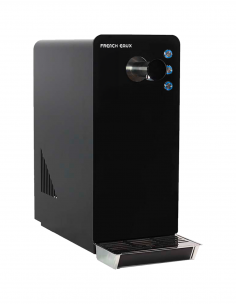
For example, compact systems such as the OneZero reverse osmosis unit from French Eaux can be installed discreetly under a sink or in a technical cabinet while producing purified drinking water without requiring electricity.
Best Practices for Safe Drinking Water On Board
Even the best filtration system should be combined with proper maintenance procedures.
Clean Freshwater Tanks Regularly
Periodic tank cleaning helps reduce:
- Sediment accumulation
- Biofilm formation
- Bacterial contamination
Cleaning frequency depends on vessel usage and cruising conditions.
Maintain Filtration Equipment
Filters and membranes should be replaced according to manufacturer recommendations.
Regular servicing helps ensure consistent performance and water quality.
(See also: Boat Water Filtration Maintenance: How to Keep Drinking Water Safe On Board)
Monitor Water Quality
Changes in taste, odour or appearance should never be ignored.
They may indicate:
- Excessive stagnation
- Saturated filters
- System contamination
Early intervention can prevent more serious problems later.
Safe Drinking Water Requires More Than a Tank
Freshwater tanks are an essential part of life on board, but they should not be viewed as a guarantee of safe drinking water.
Water quality depends on:
- The original water source
- Storage conditions
- Tank maintenance
- Plumbing-system hygiene
- Effective filtration
Without proper management, stored water can deteriorate surprisingly quickly.
Conclusion
So, can you drink water from a boat's freshwater tank?
Yes—but only when the entire water system is properly maintained and supported by effective filtration.
Source-water quality, tank hygiene, plumbing condition and purification technology all play critical roles in determining whether onboard water remains safe to drink.
For modern yachts and catamarans, combining regular maintenance with advanced purification systems such as reverse osmosis remains one of the most reliable ways to ensure consistently safe drinking water, regardless of where the water originally came from.
At French Eaux, we believe that safe drinking water starts long before it reaches the tap. A well-designed system, proper maintenance and reliable purification are the foundations of healthy onboard living.



Comments (0)