Why Standard Boat Water Filters Aren't Enough for Safe Drinking Water
The False Sense of Security Many Boat Owners Have
Most yachts and cruising boats are equipped with some form of water filtration. In many cases, that means a sediment filter, an activated carbon cartridge, or both.
Because these systems improve taste, reduce odours and make water appear cleaner, many owners assume they provide complete protection.
Unfortunately, modern water-quality challenges go far beyond what traditional filtration systems were originally designed to handle.
Today, marina water may contain microorganisms, dissolved contaminants, pharmaceutical residues, microplastics and emerging pollutants that cannot be removed by basic filtration alone.
For boat owners who rely on onboard freshwater systems every day, understanding these limitations is essential.
What Standard Boat Water Filters Actually Do
Traditional filtration systems still play an important role in onboard water treatment.
Sediment Filters
Sediment filters are designed to capture visible particles such as:
- Sand
- Rust
- Scale
- Suspended solids
They help protect plumbing systems and downstream equipment while improving water clarity.
Activated Carbon Filters
Carbon cartridges are effective at reducing:
- Chlorine
- Certain odours
- Some unwanted tastes
- A limited range of organic compounds
These filters can significantly improve the overall drinking experience.
However, improving water quality is not the same as guaranteeing water safety.
What Standard Filters Cannot Remove
This is where many onboard filtration systems reach their limits.
Most sediment and activated carbon filters are unable to reliably remove:
- Viruses
- Many bacteria
- Nitrates
- Heavy metals
- PFAS ("forever chemicals")
- Pharmaceutical residues
- Dissolved contaminants
- Ultrafine microplastics
As a result, water may look crystal clear while still containing substances that affect both health and long-term water quality.
This distinction is particularly important aboard yachts where water may remain stored for extended periods before consumption.
Why Water Storage Creates Additional Risks
Even if marina water is acceptable when it enters the vessel, onboard storage introduces new challenges.
Freshwater tanks often experience:
- Prolonged stagnation
- Temperature fluctuations
- Biofilm development
- Bacterial growth
- Algae formation
These conditions create an environment where contamination can develop despite the presence of basic filtration.
In many cases, the problem is not only the source water but also what happens after the water enters the boat.
The Hidden Threat of Modern Contaminants
Water-quality concerns have evolved considerably over the last decade.
Today's boat owners face contaminants that were rarely discussed in traditional marine plumbing systems.
Examples include:
Microplastics
Tiny plastic particles can enter water supplies through environmental contamination and plumbing materials.
PFAS
Known as "forever chemicals," PFAS are persistent synthetic compounds increasingly detected in drinking water around the world.
Pharmaceutical Residues
Trace amounts of medications and personal-care products are now commonly found in many water sources.
These contaminants are generally invisible and cannot be removed by standard sediment filtration.
Why Reverse Osmosis Changes Everything
Reverse osmosis (RO) operates at an entirely different level from conventional filtration.
Instead of trapping visible particles, RO membranes remove contaminants at the molecular scale.
A properly designed reverse osmosis system can significantly reduce:
- Bacteria
- Viruses
- Nitrates
- Heavy metals
- PFAS
- Pharmaceutical residues
- Microplastics
- Dissolved contaminants
This makes reverse osmosis one of the most comprehensive water-treatment technologies available for yachts and boats.
Most importantly, it provides consistent water quality regardless of variations in marina water supplies.
A Practical Reverse Osmosis Solution for Boats
One of the most common misconceptions about reverse osmosis is that it requires large, power-hungry equipment.
Modern marine systems have eliminated many of these concerns.
The OneZero Reverse Osmosis System was specifically developed for environments where space, simplicity and reliability matter.
Its advantages include:
- Compact dimensions
- Non-electric operation
- Installation under a sink or in a technical locker
- Consistent production of purified drinking water
- Low maintenance requirements
By treating water immediately before consumption, French Eaux OneZero provides a reliable barrier against both source-water variability and storage-related contamination.
It is a product by French Eaux to provide purified water on board.
Safe Water Distribution Matters Too
Producing purified water is only one part of a complete drinking water strategy.
The way water is distributed throughout the vessel also affects comfort, hygiene and usability.
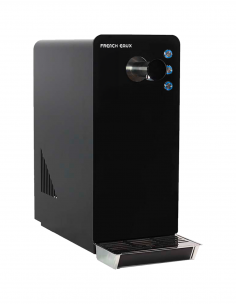
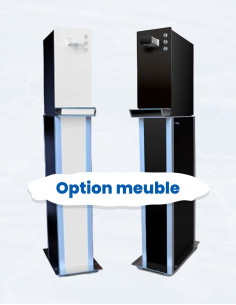
Oceane Water Dispenser
The Oceane Water Dispenser provides:
- Ambient water
- Chilled water
- Sparkling water
Its high-capacity design makes it particularly suitable for guest areas, crew spaces and charter yachts where water consumption is frequent.
Combined with reverse osmosis purification, it delivers a premium onboard drinking-water experience.
It is a product by French Eaux to provide purified water on board.
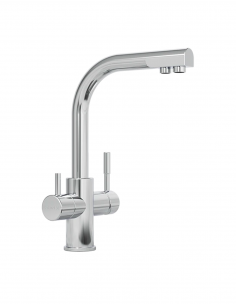
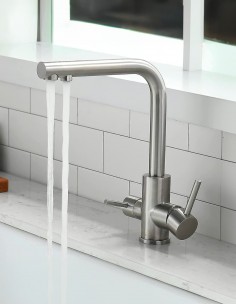
Three-Way Drinking Water Tap
For galleys and technical areas, a three-way tap provides direct access to:
- Hot water
- Cold water
- Reverse osmosis purified water
This solution keeps drinking water separate from the vessel's general water supply while maintaining a clean, uncluttered installation.
The Most Effective Water Treatment Strategy On Board
For reliable drinking water quality, French Eaux recommends a complete treatment approach:
Pre-Filtration
Sediment filtration protects equipment from suspended particles.
Carbon Filtration
Activated carbon reduces chlorine and improves taste.
Reverse Osmosis
Provides advanced purification against biological and chemical contaminants.
Controlled Distribution
Three-way taps or water dispensers ensure purified water reaches passengers safely and conveniently.
Each stage plays a specific role, but reverse osmosis remains the key element that transforms filtered water into genuinely high-quality drinking water.
Conclusion
Traditional sediment and carbon filters remain valuable components of a marine water-treatment system, but they should not be mistaken for complete purification solutions.
Modern contaminants, storage-related risks and varying marina water quality require a more advanced approach.
For yacht and boat owners seeking reliable, high-quality drinking water, reverse osmosis remains the most effective technology available.
By combining pre-filtration, reverse osmosis and appropriate distribution systems, it becomes possible to provide consistently safe drinking water regardless of where the vessel takes on water.
At French Eaux, we design solutions specifically adapted to marine environments, helping owners, captains and shipyards achieve the highest standards of onboard water quality.



Comments (0)