Biofilm in Boat Water Tanks: The Hidden Threat to Drinking Water On Board
Why Biofilm Is a Major Concern on Boats
On yachts, catamarans and cruising vessels, drinking water is often stored in freshwater tanks for days or even weeks at a time. Even when the water is clean at the moment it enters the system, storage conditions can gradually affect its quality.
One of the most overlooked threats is biofilm.
Invisible to the naked eye, biofilm can develop inside water tanks, plumbing systems and onboard equipment, creating an environment where microorganisms can thrive.
Unlike a one-time contamination event, biofilm establishes itself over time and can become a continuous source of water-quality degradation.
What Exactly Is Biofilm?
Biofilm is a biological structure made up of microorganisms such as bacteria, fungi and algae that attach themselves to moist surfaces.
Once established, these microorganisms produce a protective matrix that allows them to:
- Adhere to surfaces
- Resist disinfectants
- Survive changing environmental conditions
This protective layer makes biofilm significantly more difficult to eliminate than free-floating microorganisms in water.
Where Does Biofilm Develop on a Boat?
On a yacht or catamaran, biofilm can form in:
- Freshwater tanks
- Plumbing lines
- Pumps
- Fittings and seals
Even well-maintained systems can be affected, particularly when water remains stagnant for extended periods.
Why Biofilm Is Difficult to Remove
A Natural Shield for Bacteria
Biofilm acts as a protective barrier.
The bacteria living within the biofilm are often far more resistant than bacteria suspended directly in water.
As a result:
- Chlorine becomes less effective
- Standard disinfection methods may have limited impact
- Surface cleaning alone may not solve the problem
A Gradual Process
Biofilm does not appear overnight.
Its development generally follows several stages:
- Initial attachment of microorganisms
- Adhesion to internal surfaces
- Formation of a protective matrix
- Growth and stabilization of the colony
Once established, biofilm can continuously release microorganisms back into the water supply.
How Biofilm Affects Drinking Water On Board
Biofilm can impact water quality in several ways.
Microbiological Contamination
Even when clean water enters the tank, biofilm can act as a persistent source of bacterial contamination.
This may result in:
- Recurring contamination
- Inconsistent water quality
- Reduced confidence in the safety of onboard drinking water
(See also: Can You Drink Water from a Boat's Freshwater Tank?)
Changes in Taste and Odour
Biofilm can produce organic compounds that affect the sensory quality of water.
Common signs include:
- Unpleasant tastes
- Musty or stagnant odours
- Water that tastes "old"
These changes are often among the first indicators that maintenance may be required.
Potential Health Concerns
Even when major pathogens are not present, repeated exposure to contaminated water can contribute to:
- Digestive discomfort
- General fatigue
- Reduced onboard comfort and wellbeing
(See also: Is Your Boat's Drinking Water Safe? Hidden Health Risks for Crew and Passengers)
Why Boats Create Ideal Conditions for Biofilm
Water Stagnation
Unlike municipal water systems, water on a boat is not constantly moving.
Freshwater may remain stored in tanks and plumbing for extended periods, creating favourable conditions for microbial growth.
Warm Temperatures
Technical compartments, engine rooms and storage spaces often experience elevated temperatures.
Warm conditions can accelerate biological activity and encourage biofilm formation.
Variable Source Water
Every marina and harbour supplies water with different characteristics.
Changes in source-water quality can introduce varying levels of microorganisms into the onboard system.
(See also: Is Marina Water Safe to Drink? How to Ensure Safe Drinking Water on Your Boat)
How to Prevent Biofilm Formation
Clean Freshwater Tanks Regularly
Routine tank maintenance is one of the most effective ways to limit biofilm development.
Best practices include:
- Completely draining tanks periodically
- Cleaning internal surfaces
- Disinfecting the water system when necessary
(See also: How to Prevent Contaminated Water in Boat Freshwater Tanks)
Avoid Long Periods of Stagnation
Regular water circulation helps reduce the conditions that allow microorganisms to establish themselves.
Whenever possible, avoid leaving water unused in tanks for extended periods.
Use Effective Filtration
Advanced water-treatment systems can reduce the microbial load entering the system and provide an additional layer of protection.
The Important Role of Reverse Osmosis
Reverse osmosis is one of the most effective technologies available for producing purified drinking water on board.
An Effective Barrier Against Contaminants
Its ultra-fine membrane significantly reduces:
- Bacteria
- Viruses
- Dissolved contaminants
- Many chemical pollutants
(See also: Ultrafiltration vs Reverse Osmosis for Yachts: Which Water Treatment System Is Best?)
Protection at the Point of Consumption
Even if biofilm exists somewhere within the onboard system, properly designed filtration at the point of use can help ensure that the water being consumed remains safe.
This should be viewed as a complement to tank maintenance—not a replacement for it.
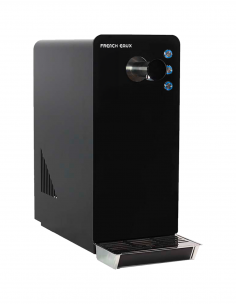
For yachts and catamarans, compact reverse osmosis systems such as the OneZero from French Eaux provide an effective way to produce purified drinking water directly on board while minimizing space requirements.
Best Practices for Long-Term Water Quality
To reduce biofilm-related risks over time:
- Clean freshwater tanks regularly
- Avoid extended periods of water stagnation
- Monitor changes in taste and odour
- Maintain filtration equipment according to schedule
- Use an effective purification system
(See also: Boat Water Filtration Maintenance: How to Keep Drinking Water Safe On Board)
Conclusion
Biofilm is one of the most common yet least visible threats to drinking-water quality on boats.
It can develop even in seemingly clean systems and gradually compromise the safety and reliability of onboard water supplies.
Understanding how biofilm forms—and taking proactive steps to prevent it—is essential for maintaining safe drinking water on board.
In modern boating, water safety depends not only on the quality of the source water but also on the management of the entire system: storage, circulation, maintenance and purification.
At French Eaux, we believe that effective water treatment starts with a complete approach that protects every stage of the onboard water journey, from tank to tap.



Comments (0)