Why Bottled Water Is Not the Best Option on a Boat
A Common Habit On Board
On many yachts, catamarans and charter boats, bottled water is still seen as the safest and most convenient way to ensure drinking water quality on board.
It feels reassuring:
- Ready to drink
- Easy to store (at first glance)
- No reliance on onboard systems
However, in the long term, bottled water introduces significant practical, environmental and logistical limitations in a marine environment.
The Logistical Challenges of Bottled Water On Board
Storage Constraints
Storing bottled water quickly becomes problematic on a boat:
- Storage lockers fill up rapidly
- Technical spaces are occupied
- Provisioning areas become congested
On smaller vessels, this can significantly reduce usable storage for essential equipment and supplies.
Weight Impact
Water is heavy.
Even a modest stock of bottled water can add hundreds of kilograms on board, which may:
- Increase fuel consumption
- Affect vessel balance
- Complicate handling and loading operations
Continuous Supply Management
Keeping bottled water on board requires ongoing logistics:
- Regular resupply in marinas
- Inventory management
- Plastic waste disposal
In remote cruising areas or small islands, resupply can become difficult or inconsistent.
Bottled Water Is Not Always Perfect
Variable Quality
Contrary to popular belief, bottled water is not always guaranteed to be consistent in quality. Depending on storage conditions and brand, it may:
- Develop off-flavours over time
- Be affected by mineral variation
- Degrade if exposed to heat or sunlight
Plastic and Heat Exposure
On a boat, bottled water is often stored in warm environments.
Heat and prolonged storage can increase the risk of chemical migration from plastic into the water, especially in enclosed compartments exposed to high temperatures.
Environmental Impact in the Marine Context
Plastic Waste Accumulation
The use of bottled water contributes significantly to onboard plastic waste:
- Packaging materials
- Transport emissions
- Disposal challenges
Even when recycled, the overall footprint remains substantial.
For modern yacht operations and charter fleets, reducing plastic consumption is also increasingly tied to environmental responsibility and brand image.
Why More Boats Are Moving Toward Onboard Filtration
Instead of relying on bottled water, more vessels are shifting toward producing drinking water directly on board.
This approach offers:
- Greater autonomy
- Reduced waste
- Improved long-term reliability
Reverse Osmosis: A More Reliable Alternative
Reverse osmosis is one of the most effective onboard water purification technologies.
It removes:
- Bacteria and viruses
- Microplastics
- Chemical residues
- Heavy metals
- Unpleasant tastes and odours
This ensures consistent water quality regardless of port or marina conditions.
See also: Ultrafiltration vs Reverse Osmosis on a Boat: Why Purified Water On Board Requires Reverse Osmosis
(voir aussi : Ultrafiltration vs Reverse Osmosis for Yachts: Which Water Treatment System Is Best?)
Producing Drinking Water Directly On Board
With a compact marine reverse osmosis system, it becomes possible to:
- Greatly reduce bottled water consumption
- Secure drinking water quality at the source
- Simplify daily onboard operations
Modern systems are designed specifically for marine constraints:
- Compact footprint
- Low maintenance requirements
- Easy integration into existing water systems
The Role of Water Dispensers on Board
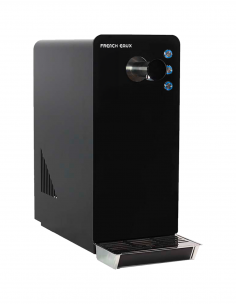
Modern onboard water dispensers provide a practical alternative to bottled water distribution.
They allow:
- Chilled water
- Ambient water
- Sparkling water
All while using purified water produced onboard.
This significantly improves comfort for:
- Crew
- Owners
- Charter guests
(voir aussi : Safe Drinking Water on Yachts: Reverse Osmosis Systems for Boats & Catamarans)
A More Cost-Effective Long-Term Solution
While onboard filtration systems require an initial investment, they typically result in:
- Lower recurring costs
- Reduced provisioning needs
- Simplified logistics
For regularly used vessels, the long-term savings can be significant.
The Importance of Maintenance
Like any onboard system, water filtration requires regular maintenance:
- Filter cartridge replacement
- Tank cleaning
- System performance checks
Proper maintenance ensures consistent water quality over time.
(voir aussi : Boat Water Filtration Maintenance: How to Keep Drinking Water Safe On Board)
Conclusion
Bottled water remains common in the boating world, but its limitations are increasingly clear: storage constraints, weight, cost, plastic waste and inconsistent quality.
Modern onboard filtration systems now make it possible to produce safe drinking water directly on board, offering a more efficient and sustainable alternative.
For yachts, catamarans and charter vessels, this approach delivers greater autonomy, improved comfort and a more responsible environmental footprint.



Comments (0)