
Your cart
There are no more items in your cart
Hard Water Effects on Skin and Hair
Tight skin after a shower, dull hair despite a good shampoo, an itchy scalp: these everyday discomforts are often blamed on the wrong products. But in many parts of France, the real cause lies in the water itself.
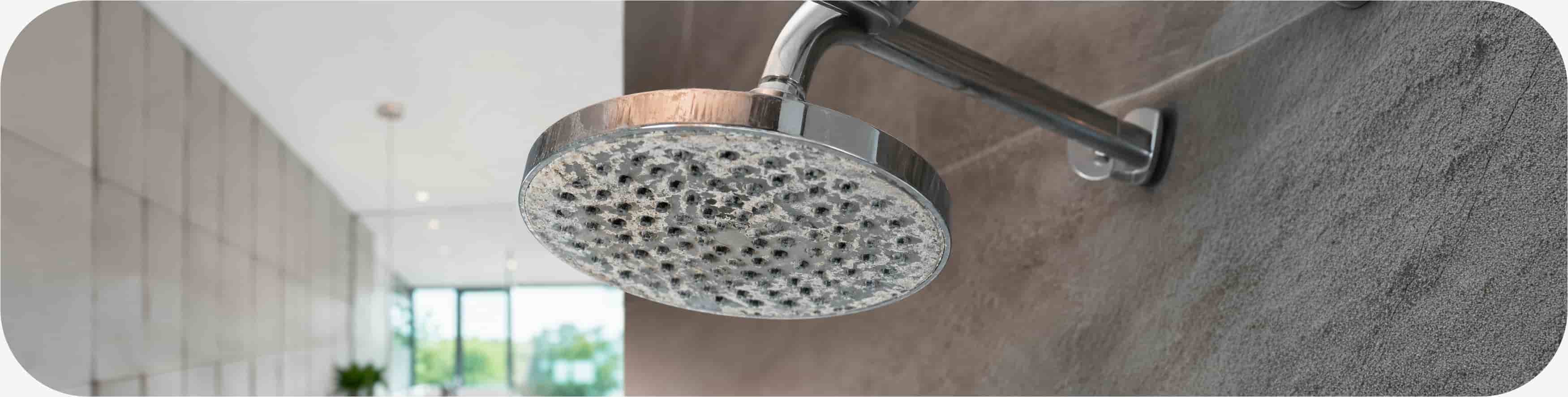
What hard water does to your skin in the shower
Skin has a natural hydrolipidic film — a thin, slightly acidic protective layer (pH between 4.7 and 5.75) that retains moisture and shields the epidermis from external aggressors. This film is delicate and sensitive to the pH of the water it comes into contact with.
Hard water is alkaline. When it contacts the skin, it disrupts this protective film by neutralising its natural acidity. Calcium and magnesium microcrystals deposit on the epidermis and clog pores, preventing the skin from breathing normally and reducing its ability to retain moisture.
The visible result: skin that feels tight after a shower, itching, rough texture and progressive dehydration even with a solid skincare routine. For people with atopic or sensitive skin, these effects are amplified — hard water is recognised as an aggravating factor for eczema and dermatitis.
One important detail: the hotter the water, the more pronounced these effects. Heat accelerates calcite crystallisation on the skin surface. Dermatologists recommend not exceeding 37°C in the shower (36°C for atopic skin) — advice that takes on particular relevance in hard water areas.
What hard water does to your hair
The mechanism is similar but affects the hair fibre differently. Hair is covered in cuticles — scales that, when healthy, close tightly after washing and give hair its shine and suppleness. Hard water disrupts this process in two ways.
First, dissolved calcium and magnesium react with the surfactants in shampoo to form insoluble deposits that stick to the hair fibre. These residues prevent the cuticles from closing properly. The hair stays "open", rough to the touch, visually dull — it reflects less light. Even after drying and styling, the "clean" effect lasts less time than it should.
Second, hard water progressively strips the natural oils produced by the scalp — the same oils that hydrate and protect the fibre. Without these oils, hair becomes brittle, prone to split ends, and harder to style. Long, curly or colour-treated hair is particularly vulnerable as it requires more natural protection.
On the scalp, accumulating limescale disrupts the naturally acidic pH balance — which encourages dry dandruff, itching and sometimes flaking patches. Many people who increase their shampooing frequency in response to these symptoms are actually making things worse: every wash with hard water reloads the mineral deposits.
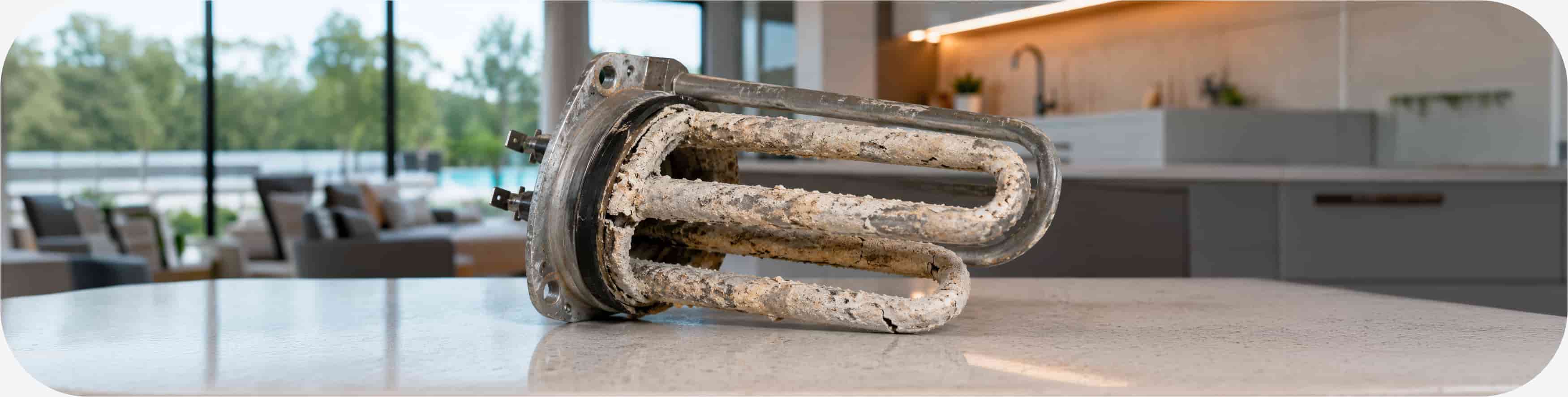
How to tell if hard water is the cause
Several signs help distinguish a water-related problem from one caused by products or genetics.
Skin feels tight systematically after every shower, even with a moisturising body wash, and the sensation fades quickly after applying cream. That's the classic sign of skin whose protective film has been disrupted by the water — not a lack of care.
Hair seems clean for less time than expected, or looks dull the day after washing despite using conditioner. Haircare products seem less effective than before, or less effective than for others using the same products — because hard water reduces how well treatments are absorbed.
The scalp itches or flakes without a prior history of dandruff or particular skin conditions. Shampooing more frequently doesn't resolve the issue and may make it worse.
The geographic context test: if these symptoms started or worsened after moving to a new area, and local water is classified as hard (TH above 25 °f), the connection is very likely. Equally, if the discomfort disappears during holidays in a soft water region (Brittany, Massif Central, Vosges), that's a strong signal.
The hidden cost of hard water on your personal care products
Hard water measurably reduces the effectiveness of hygiene and skincare products. The surfactants in shampoos and shower gels react with calcium and magnesium in hard water to form insoluble salts — which is why products are so difficult to lather in hard water areas. To get the same foam, amounts used are often doubled.
The same logic applies to conditioners, hair masks and moisturisers: applied to skin or hair loaded with mineral deposits, they simply don't penetrate as effectively. Many people buy more expensive or more concentrated products trying to solve a problem that actually comes from the water.
For a household of 2 to 4 people in a hard water area, the extra product consumption caused by limescale represents an estimated additional spend of €150 to €300 per year — not counting corrective care products (repair creams, anti-dandruff treatments, intensive hair treatments).
Immediate steps to limit the effects
While waiting for a long-term solution, a few habits can reduce the impact of hard water on skin and hair.
Lowering the water temperature is the simplest and most immediately effective measure. Below 37°C, limescale crystallisation on skin is significantly reduced. A final cold rinse helps close hair cuticles and remove some of the mineral residue.
Finishing the hair rinse with slightly acidified water — a few drops of apple cider vinegar or diluted lemon juice in water — helps neutralise the alkalinity of the limescale and close the cuticles. An effective short-term workaround, not a lasting fix.
Avoiding prolonged baths reduces skin exposure to hard water compared to a short shower. For babies who take baths, dermatologists recommend rinsing with clean water before drying.
These steps improve comfort but don't address the root cause. The only solution that eliminates the problem at source is softening the water before it reaches the household taps.
Treat the problem at the source
A water softener reduces the concentration of calcium and magnesium in all the water throughout the home — shower, bath, hair washing. The effects on skin and hair are typically noticeable within the first few weeks: less dry skin, softer hair, fewer products needed.
Frequently asked questions
Can hard water worsen eczema?
Yes. Hard water disrupts the skin's hydrolipidic film, which acts as a protective barrier. In people with atopic skin, this disruption can trigger or worsen eczema flare-ups. Several dermatological studies have established a correlation between local water hardness and the prevalence of atopic dermatitis in children.
Does hard water cause hair loss?
It can contribute indirectly. By weakening the hair fibre and irritating the scalp over time, hard water can accentuate existing hair loss. It is generally not a direct cause of severe shedding, but it aggravates already vulnerable conditions.
Is a shower filter effective against hard water?
Shower filters reduce mineral deposits on skin and hair to some extent, mainly through activated carbon or vitamin C acting on chlorine. They offer limited softening — useful in the short term, but less complete and less durable than a softener installed on the main water supply.
How long before you see a difference after installing a water softener?
Most people notice an improvement in skin and hair comfort within two to four weeks of installation. Long hair takes a little longer because the mineral deposits already accumulated along the lengths don't disappear immediately — they're gradually washed out over successive washes with softened water.
Is softened water safe for skin and hair?
Yes. Softened water is simply water with a reduced calcium and magnesium content — it isn't demineralised or chemically treated. It remains perfectly suitable for daily use in the shower, bath and hair washing. A properly calibrated softener produces output water between 8 and 12 °f — neither too hard nor too soft.
