
Your cart
There are no more items in your cart
How to Know if Your Water is Hard (Limescale)?
White streaks on taps, soap that won't lather, a kettle that scales up within weeks: France is one of the European countries where tap water is most commonly hard. Here's how to check your water's hardness at home, with no special equipment, and what the numbers actually mean for your household.
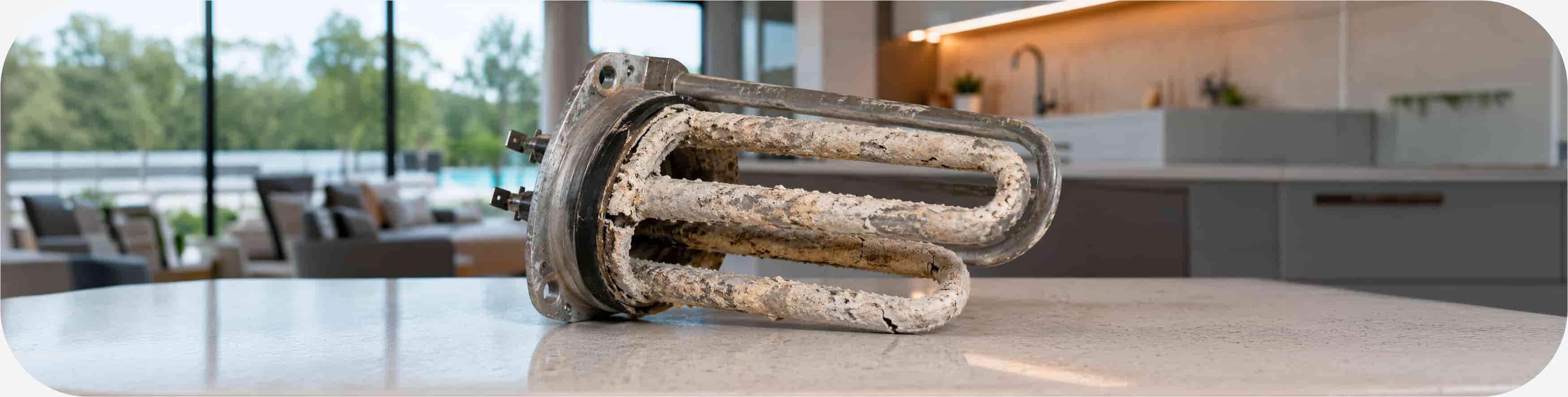
Visible signs of hard water
Before running any test, a few everyday clues already give a fairly reliable picture.
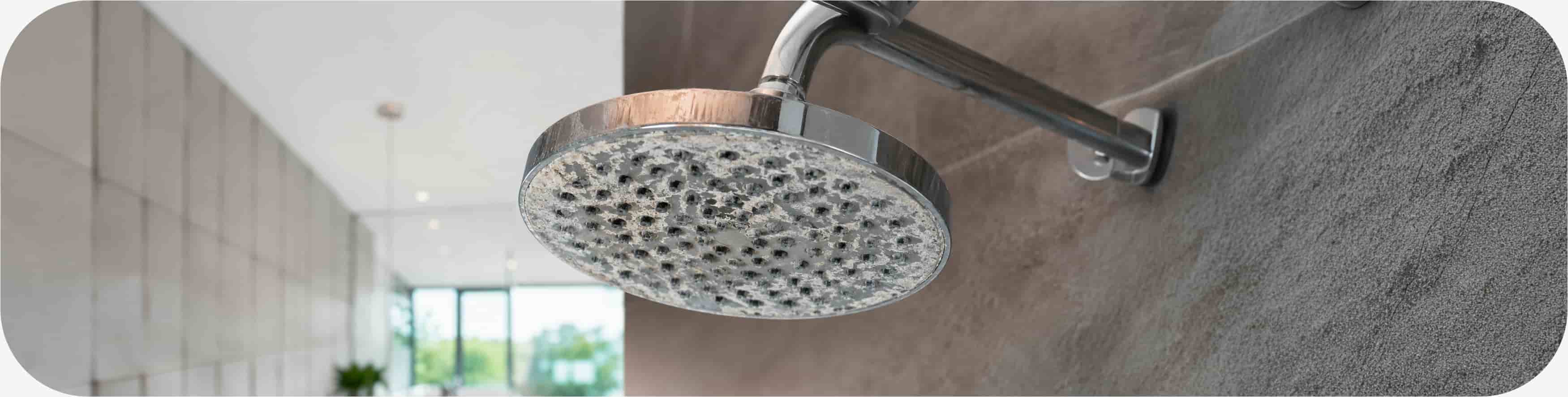
The most obvious: white or greyish streaks forming on taps, at the bottom of glasses, or on the inside of a kettle after boiling. These deposits are calcium carbonate, left behind once the water evaporates.
Laundry turning rough over repeated washes, even though the detergent hasn't changed, is another classic sign. The same goes for soap that barely lathers in the shower, or skin that feels tight after rinsing.
On the equipment side, a toilet cistern that leaks slightly, shower pressure dropping gradually, or a water heater becoming noisy are often direct consequences of internal scale buildup.
Two simple tests you can do at home
The soap test: fill a clear bottle halfway with tap water, add a few drops of liquid soap, close it and shake for a few seconds. If the foam is thin and the water stays cloudy, that's a sign of hard water. Soft water, by contrast, produces abundant, long-lasting foam.
The white vinegar test: pour a little white vinegar onto a scaled surface (a tap, the inside of a kettle) or directly into some tap water. If you see small bubbles or a light fizzing, that's a reaction with the calcium minerals present — the stronger the reaction, the harder the water.
Both tests give a quick qualitative indication, but not a precise measurement. For an exact figure, you need the water hardness index (TH in France).
Water hardness (TH): the official measurement
Water hardness is measured in French degrees (°f) through the titre hydrotimétrique (TH) — the concentration of dissolved calcium and magnesium in the water. It's the reference value used by all water suppliers (Veolia, Suez, municipal utilities) and reported by health authorities in annual water quality reports.
The general thresholds used in France:
- 0 to 15 °f — soft water. No scale buildup, but can be slightly corrosive to certain metal pipes below 8 °f.
- 15 to 25 °f — moderately hard water. Balanced, few day-to-day issues.
- 25 to 35-40 °f — hard water. Visible deposits, gradual scaling of equipment; a water softener becomes worth considering at this stage.
- Above 40 °f — very hard water. Rapid scaling, frequent maintenance required, noticeable loss of efficiency on heating appliances.
According to the most recent data from France's water observatory, around 38% of French households receive water classified as hard to very hard (above 25 °f) — a proportion that rises sharply in the north and east of the country, where the underlying soil is predominantly limestone-based.
Why water hardness varies so much by region
Water hardness depends directly on the geology of the ground it passes through before reaching your tap. Water flowing through limestone-rich sedimentary rock — typically in northern France, the Paris basin, Alsace, or parts of Provence — picks up high levels of calcium and magnesium, resulting in hard to very hard water.
Conversely, water passing through granite or volcanic soil — Brittany, the Massif Central, the Vosges, the Pyrenees — stays naturally soft, often with a TH below 15 °f.
This geographic pattern explains why two households just a few hundred kilometres apart can face very different realities when it comes to limescale, with nothing about their habits explaining the difference.
How to find the exact TH of your water
Three reliable sources, with no test required:
The annual water quality report, sent by your supplier or available on request from your local town hall if your municipality has more than 3,500 residents.
The Ministry of Health website, which publishes sanitary control results for water intended for human consumption, searchable by commune.
Your water supplier directly (Veolia, Suez, or a local utility), who can provide the precise TH for your area on request.
What limescale really costs a household
Beyond the discomfort, limescale has a measurable cost. Just 1 mm of scale buildup on a water heater's heating element can increase annual energy consumption by around 10%. Over several years, an unprotected water heater can lose up to 20% of its efficiency.
Appliance manufacturers (washing machines, dishwashers) now frequently exclude scale-related breakdowns from warranty coverage above a certain hardness threshold — generally around 25 °f. It's one of the reasons more and more households in hard-water regions are turning to a water softener.
Is your water hard? Here's the solution
If your TH is above 25 °f, or if several of the signs above sound familiar, a water softener can protect your equipment and improve your everyday comfort.
Frequently asked questions
At what TH should I install a water softener?
A water softener generally becomes worth considering from 25 °f, and strongly recommended above 30 to 35 °f, when scale buildup and equipment damage become significant.
Is hard water harmful to health?
No. There is no maximum regulatory limit for water hardness in France, as limescale is not considered harmful. It actually contributes part of the daily recommended intake of calcium and magnesium. The issue with hard water is mainly one of comfort and equipment lifespan.
Can water be too soft?
Yes. Water with a TH below 5-8 °f can become slightly corrosive to certain metal pipes. That's why a properly calibrated softener typically targets output water between 8 and 12 °f, rather than completely softened water.
Is the vinegar test 100% reliable?
It gives a useful qualitative indication but remains approximate. For a precise measurement, the annual water quality report or an analysis from your supplier remains the reference.
Why doesn't my neighbour have the same limescale issue as me?
TH can vary within the same department, or even within the same town, depending on which water source supplies the local network. Regional figures give a general trend, but only your commune's report gives a reliable value for your specific address.
