Is Marina Water Safe to Drink? How to Ensure Safe Drinking Water on Your Boat
The Hidden Risks of Marina Water
For most yacht and boat owners, freshwater comes directly from marina water supplies before being stored in onboard tanks. While this water is generally considered potable at the source, its quality can vary significantly from one marina to another.
Once loaded aboard, additional factors such as storage conditions, temperature fluctuations and tank hygiene can further affect water quality.
As a result, relying solely on the assumption that marina water is safe can expose crew and passengers to unnecessary risks.
Ensuring consistently safe drinking water requires a complete onboard treatment strategy rather than basic filtration alone.
Why Marina Water Quality Varies
Marina water is supplied through local municipal networks, which differ from country to country and even from port to port.
Several factors can affect water quality:
- Aging marina infrastructure
- Biofilm development inside distribution systems
- Variable chlorination levels
- Local environmental conditions
- Occasional contamination from industrial or marine activities
Water that meets regulatory standards onshore may still be far from ideal for long-term onboard consumption.
For sailors cruising internationally, water quality can change dramatically throughout a voyage.
Common Contaminants Found in Marina Water
Even clear, odourless water may contain contaminants that are impossible to detect without laboratory analysis.
Potential contaminants include:
- Bacteria
- Viruses
- Chlorine and disinfection by-products
- Heavy metals
- Nitrates
- Agricultural pollutants
- Microplastics
- Pharmaceutical residues
- Emerging chemical contaminants such as PFAS
Many of these substances cannot be effectively removed by standard onboard filters.
Why Water Becomes More Problematic After Storage
The greatest challenge often begins after the water enters the boat.
Freshwater tanks create conditions that can accelerate contamination through:
- Prolonged stagnation
- Warm temperatures
- Bacterial growth
- Biofilm formation inside tanks and plumbing systems
Even water that was safe when taken onboard can deteriorate significantly after days or weeks of storage.
This is one of the primary reasons many boat owners experience taste, odour or water-quality issues despite sourcing water from reputable marinas.
Why Standard Boat Filters Are Not Enough
Many vessels rely exclusively on:
- Sediment filters
- Activated carbon cartridges
These technologies remain useful and should be considered essential pre-treatment stages.
However, they have important limitations.
While they improve taste and remove visible particles, they generally cannot eliminate:
- Viruses
- Nitrates
- Dissolved contaminants
- Pharmaceutical residues
- Many modern chemical pollutants
Ultrafiltration provides improved microbiological protection but still leaves many dissolved contaminants untouched.
Reverse Osmosis: The Most Reliable Solution for Marina Water
Reverse osmosis remains the most comprehensive water treatment technology available for onboard drinking water production.
A properly designed reverse osmosis system can significantly reduce:
- Bacteria and viruses
- Nitrates
- Heavy metals
- Microplastics
- Pharmaceutical residues
- PFAS and other persistent chemicals
- Dissolved contaminants affecting taste and odour
Unlike conventional filtration methods, reverse osmosis provides consistent water quality regardless of fluctuations in marina water supplies.
For boat owners visiting multiple ports and countries, this consistency is one of its greatest advantages.
OneZero: Compact Reverse Osmosis Designed for Boats
The OneZero Reverse Osmosis System was developed specifically for environments where space and simplicity matter.
Its compact, non-electric design makes it particularly attractive for yachts, sailing boats and catamarans.
Benefits include:
- Installation under a sink or inside a technical cabinet
- No electrical consumption
- Reliable operation using water pressure alone
- Consistent production of high-quality drinking water
- Compact footprint suitable for marine environments
By treating water immediately before consumption, OneZero helps eliminate concerns about variations in marina water quality.
The OneZero French Eaux helps provide purified water on board.
Oceane Water Dispenser: Delivering Purified Water with Comfort and Convenience
Producing purified water is only part of the solution.
Providing convenient access to that water is equally important.
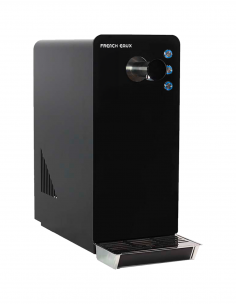
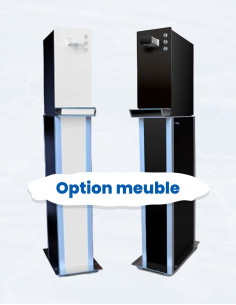
The Oceane Water Dispenser offers:
- Ambient water
- Chilled water
- Sparkling water
For yachts, charter vessels and hospitality-oriented boats, Oceane combines functionality with a premium guest experience.
Its high flow rate and elegant design make it ideal for crew areas, salons and guest spaces where water consumption is frequent.
When supplied with reverse osmosis water, Oceane becomes a complete onboard drinking water solution.
It is a product by French Eaux to provide purified water on board.
A Three-Way Tap for Everyday Convenience
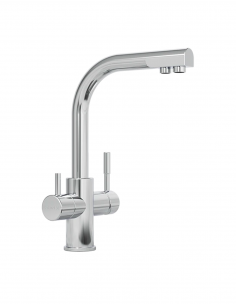
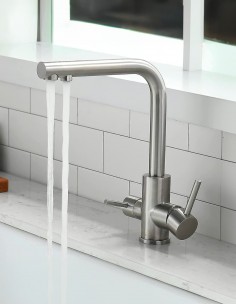
For galley installations and technical areas, a dedicated French Eaux three-way tap provides a practical alternative to separate drinking water faucets.
A three-way configuration delivers:
- Hot water
- Cold water
- Reverse osmosis purified water
This solution allows boat owners to access filtered drinking water directly from the main sink without altering daily habits or compromising aesthetics.
Recommended Setup for Safe Drinking Water On Board
For the highest level of protection, French Eaux recommends a complete treatment chain:
Marina Water Intake
Sediment pre-filtration removes suspended particles before they enter the vessel.
System Protection
Activated carbon filtration helps reduce chlorine and organic compounds.
Final Purification
Reverse osmosis removes the widest range of contaminants.
Distribution
A dedicated drinking water tap or water dispenser provides purified water at the point of use.
This configuration ensures water quality remains consistent regardless of where the vessel takes on water.
Best Practices for Maintaining Water Quality
Even the best filtration system benefits from proper maintenance.
Recommended practices include:
- Regular tank cleaning
- Timely filter replacement
- Inspection of hoses and fittings
- Avoiding long periods of stagnation
- Periodic water-quality testing
These simple measures help maintain both water quality and system performance over the long term.
Conclusion
Marina water should never be assumed to be identical from one port to another.
Variations in source quality, onboard storage conditions and modern contaminants make water treatment an essential component of life aboard any yacht or boat.
At French Eaux, we recommend a comprehensive approach combining reverse osmosis, intelligent water distribution and preventive maintenance to ensure consistently safe drinking water wherever you cruise.
By treating water at the point of consumption rather than relying solely on marina infrastructure, boat owners gain greater confidence, comfort and protection for everyone on board.



Comments (0)